

Double Cleansing: Are You Actually Doing It Right?
If you already know what double cleansing is and you're doing it regularly, good. You're ahead of most people. But knowing the method and executing it correctly are different things — and the gap between them is where most of the common cleansing problems live.
New to double cleansing? Find our beginner's guide to double cleansing here.

Not Emulsifying the Oil Cleanser Properly
This is the most common and most consequential mistake in the double cleansing method — and it's also the easiest to fix.
When you apply a cleansing oil to dry skin, it binds to the oil-soluble debris on the surface: SPF, sebum, makeup. But it only releases that debris — and rinses off cleanly — when you add water and emulsify. Emulsification is the moment the oil turns milky in your hands. That's the phase change that allows everything it's collected to be lifted away with water.
If you rinse with water before fully emulsifying — or don't work the water in long enough — the oil (and everything in it) doesn't fully clear. You're left with a residual film on the skin that the second cleanse then has to work through. At best, your foam cleanser compensates. At worst, you finish the routine with a layer of diluted SPF and sebum still sitting on your face.
How to fix it: after applying the oil cleanser to dry skin, massage thoroughly for at least 30 to 60 seconds. Then wet your fingertips with water and continue working the product into the skin until it turns completely milky and opaque. Only then rinse fully. The milky emulsion is the signal — not the timer.
Using the Wrong Oil Cleanser for Your Skin Type
Not all cleansing oils perform the same way, and the wrong choice for your skin type can cause more problems than a single cleanse would.
Heavier mineral-oil or silicone-based cleansing oils can leave a residue that congests pores — particularly for oily and acne-prone skin types. Some fragrant cleansing oils cause low-grade irritation that only becomes obvious over weeks of use, not immediately after a single wash. And formulations that don't fully emulsify leave oily residue that disrupts the rest of your routine.
Plant-based cleansing oils — particularly those using lighter botanical oils like sunflower, jojoba, or rice bran — tend to emulsify more cleanly and suit a wider range of skin types. For sensitive or reactive skin, the ingredient list of your cleansing oil deserves the same scrutiny as your serums.
IUNIK Centella Green Fresh Cleansing Oil — 94% plant-derived oils with centella asiatica and salicylic acid — emulsifies completely, suits oily, combination, and sensitive skin.
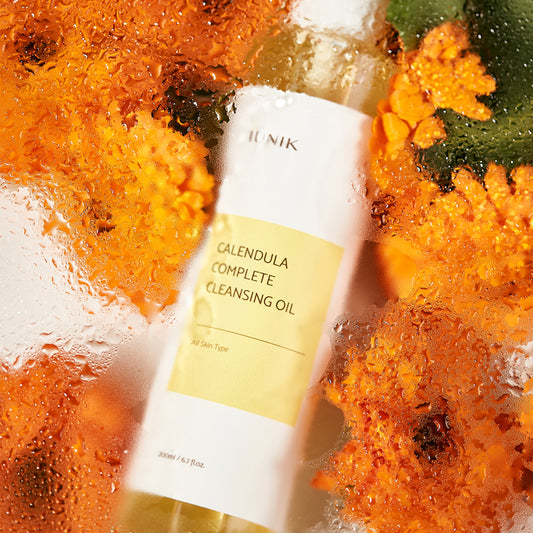
IUNIK Calendula Complete Cleansing Oil — 94% plant-based with calendula complex and micellar purifying technology — a gentler first cleanse for dry, normal, or easily irritated skin.

Double Cleansing in the Morning
This one catches people off guard — but double cleansing every morning is unnecessary for most skin types and actively counterproductive for some.
Overnight, your skin doesn't accumulate the kind of debris that requires an oil cleanse. There's no SPF, no makeup, no environmental pollution to dissolve. What's on your skin in the morning is largely your own sebum, any residual product from the night before, and the natural oils your barrier produces while you sleep. Those oils are barrier-protective — they're part of what keeps skin balanced and resilient.
Removing them with an oil cleanse every morning strips the barrier of something it needs. For oily skin types, this often triggers the exact overcorrection you're trying to avoid: the skin reads as stripped and produces more sebum in response. For dry and sensitive skin, morning oil cleansing can leave the barrier depleted before the day has even started.
What to do instead: a gentle water-based cleanse in the morning is enough for most people. If you practice slugging or use particularly heavy overnight products, a mild foam cleanser handles that residue without disrupting the barrier underneath. Save the full double cleanse for evenings.
Rubbing Instead of Massaging
Friction is the enemy of good cleansing — and of barrier health generally. There's a meaningful difference between the pressure and motion of a massage and the mechanical irritation of rubbing.
Rubbing the skin during cleansing — particularly with a cleansing oil, which creates some slip but not infinite — drags at the surface. Over time this contributes to sensitivity, broken capillaries in delicate areas, and the gradual degradation of the skin's elasticity. It also doesn't work better. The chemistry of how cleansing oils bind to and lift impurities depends on contact and movement, not force.
What to do instead: use slow, circular massage motions with light to medium pressure. Focus on areas where SPF and makeup sit heaviest — around the hairline, the sides of the nose, the chin. Let the oil do the work of dissolving; your hands are just there to distribute it evenly and aid circulation.

Using a Second Cleanser That Undoes the First
The second step in a double cleanse is supposed to be the gentle follow-through — clearing water-soluble residue and any emulsified oil that remains, without stripping the skin. Its job is finishing, not starting over.
A common mistake is reaching for a harsh, foaming cleanser with surfactants that disrupt the barrier, under the logic that you need a thorough clean after the oil step. You don't. The oil cleanser already handled the heavy lifting. A second cleanser that strips the barrier defeats the entire point of using a gentle oil first — you end up in the same place as a single harsh cleanse, just with extra steps.
What to look for: a low-pH, mild foam or gel that leaves the skin feeling comfortable, not tight. If your skin feels squeaky after the second cleanse, the cleanser is too stripping.
When You Don't Actually Need to Double Cleanse
Double cleansing is not a universal daily requirement. It's a response to specific conditions — and understanding when those conditions apply saves your barrier from unnecessary depletion.
The principle is calibration, not rigidity. Double cleanse when the conditions justify it — which for most people wearing SPF daily means every evening.
No SPF, no makeup, light activity
A single gentle cleanse at night is sufficient. If you haven't applied SPF or worn makeup and haven't been in a heavily polluted environment, there's no oil-soluble debris that requires a dedicated oil cleanse.
Morning cleanse
As above, a single mild foam is almost always enough.
Days when your barrier is compromised:
If your skin is purging, recovering from a treatment, or unusually sensitive, consider dropping to a single gentle cleanse until it stabilises. The second cleanse step adds a mild additional load on a barrier that may not need it right now.
How to Adjust Your Double Cleanse for Spring
The cleansing step that worked perfectly in January often needs recalibrating by the time spring arrives — and not because the method changes, but because your skin does.
As temperatures rise and sebum production increases, heavier cleansing oils can start to feel like too much. The rich, more emollient first cleanser that was ideal in dry winter conditions can tip into congestion territory once your skin is producing more of its own oil. Spring is the right moment to audit your cleansing oil and consider whether a lighter, plant-based formula would serve the season better.
Equally, if you were using a richer foam or gel cleanser as your second step to compensate for winter dryness, switching to something lighter in spring reduces the risk of over-stripping now that the barrier has less need for the extra cushion.
IUNIK Centella Double Cleansing Duo — The spring combination for oily, combination, or sensitive skin — a lighter plant-based cleansing oil followed by a calming foam. Salicylic acid in the oil step supports clarity as sebum increases.
IUNIK Calendula Double Cleansing Duo — For dry, normal, or easily irritated skin making the seasonal transition — the Calendula duo keeps cleansing gentle and hydrating as routines lighten up.
Also worth considering in spring: introducing a gentle exfoliating step once or twice a week alongside your double cleanse, rather than trying to compensate with a more aggressive second cleanser.
IUNIK Lime Moisture Mild Peeling Gel — A mild weekly exfoliant that clears the post-winter cell buildup without adding friction or disrupting the barrier. Use after your double cleanse, not instead of it.
The Short Version
Emulsify properly. Use a plant-based oil that suits your skin type. Skip the oil step in the morning. Massage, don't scrub. Choose a second cleanser that finishes gently rather than strips aggressively. And as spring arrives, consider whether your cleansing oil needs to get a little lighter.
Double cleansing done right takes no more time than done wrong — it just works considerably better. And since it's the first step in every routine, getting it right means every product that follows it performs better too.
New to double cleansing entirely? Start here.
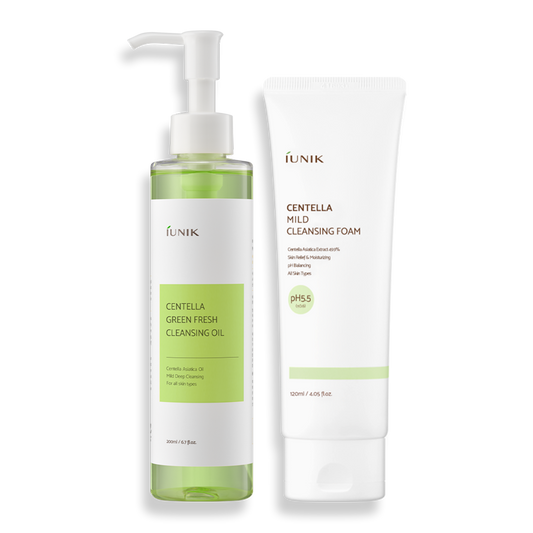
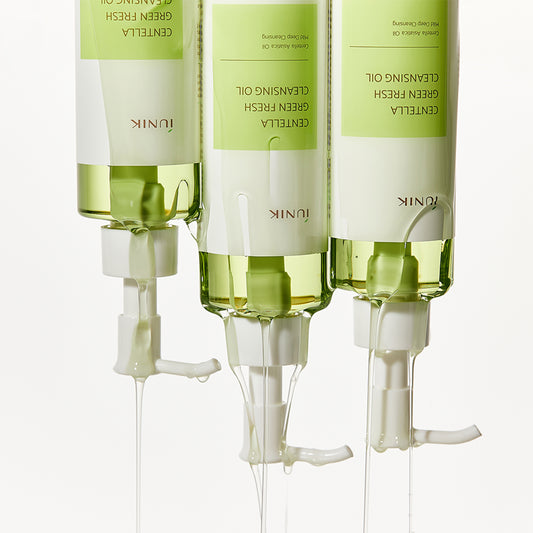
Centella Double Cleansing Duo
Soothing pore cleanse
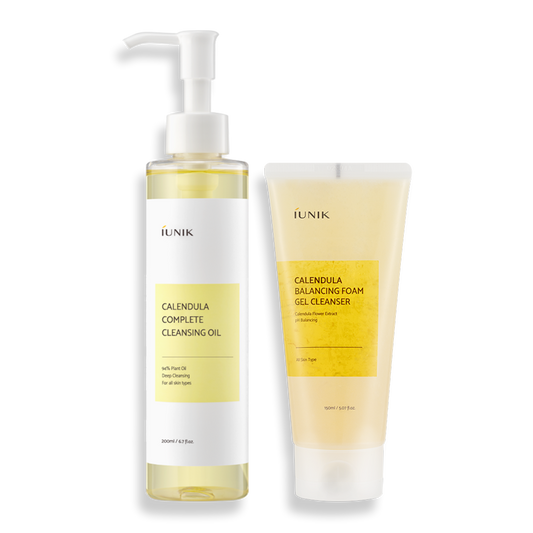
Calendula Double Cleansing Duo
Gentle deep cleansing
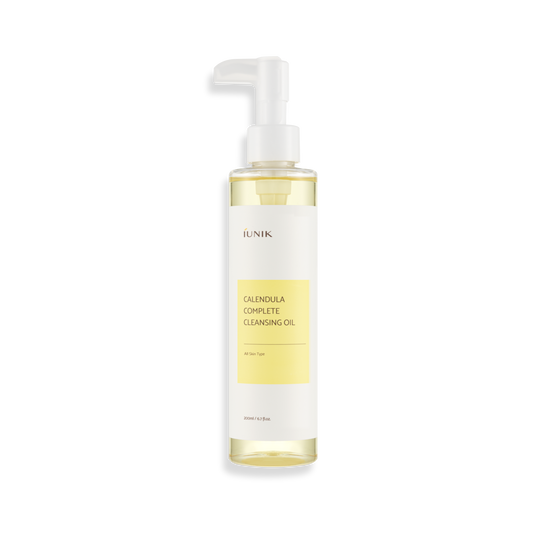
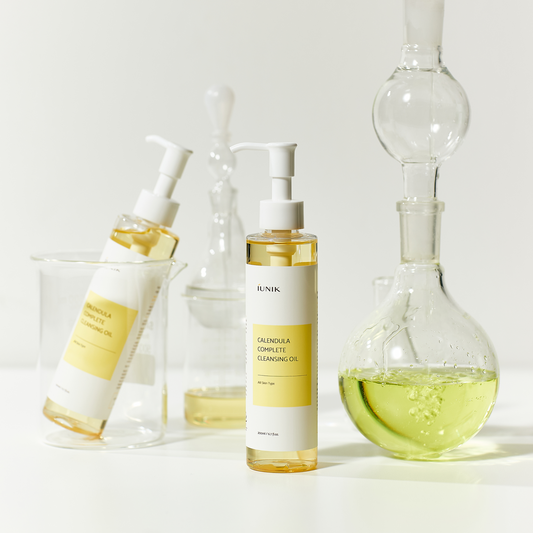
Calendula Complete Cleansing Oil
Sensitive skin cleansing oil
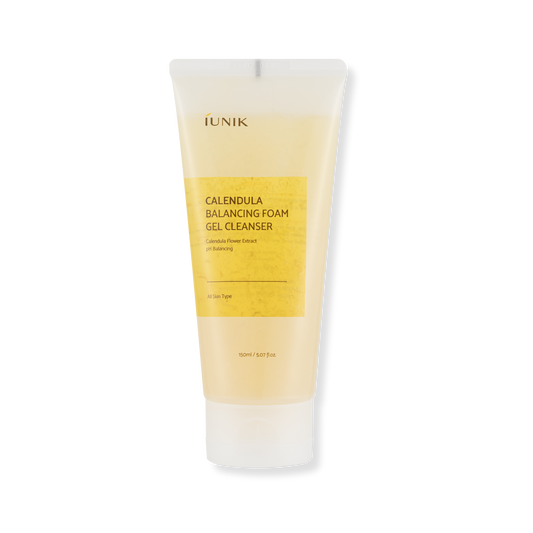
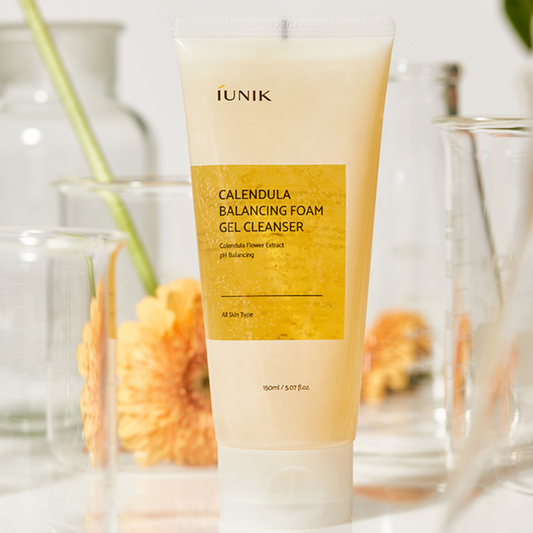
Calendula Balancing Foam Gel Cleanser
Balancing daily cleanse gel
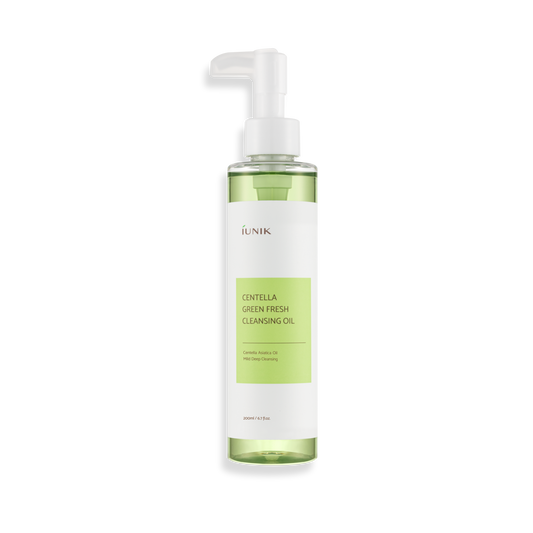
Centella Green Fresh Cleansing Oil
Fresh, plant-powered cleansing oil
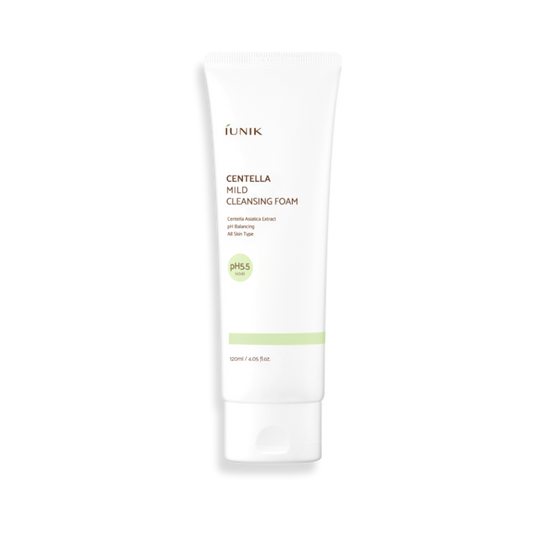
Centella Mild Cleansing Foam
Gentle pore care cleansing foam
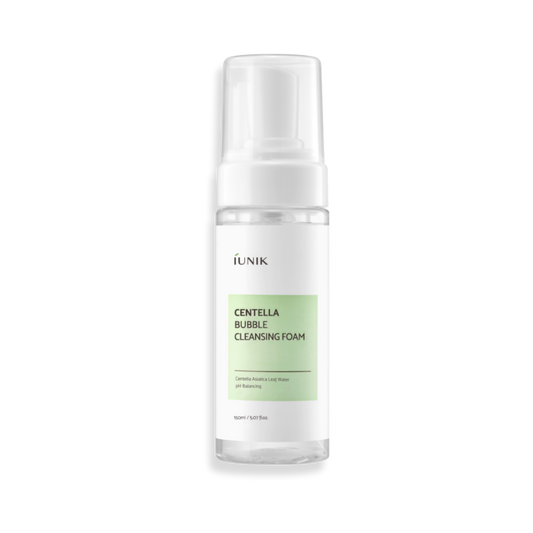
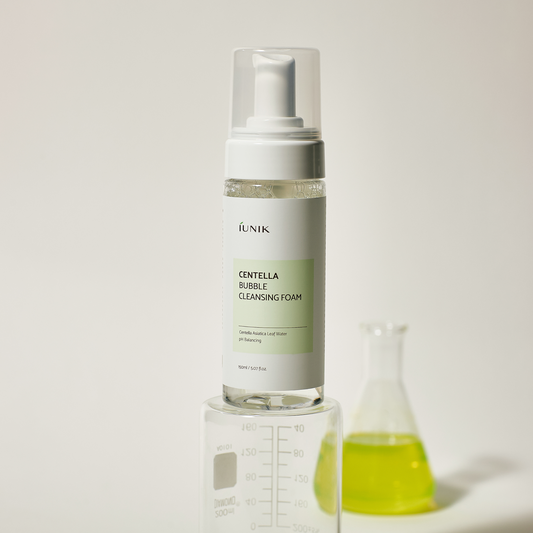
Centella Bubble Cleansing Foam
Gentle bubble wash cleanser