


Firming, Two Ways: How to Pair the Volufiline PDRN Serum
Firmness tends to go quietly. There's rarely a morning where you notice it — there's a photo taken from slightly below, or a moment where you smile and your skin takes a beat longer than it used to to settle back.
If that's what sent you to a firming serum, the serum is the right starting point. What follows is what to put with it, and why the two options do quite different jobs.
Firming, Two Ways: How to Pair the Volufiline PDRN Serum
Firmness tends to go quietly. There's rarely a morning where you notice it — there's a photo taken from slightly below, or a moment where you smile and your skin takes a beat longer than it used to to settle back.
If that's what sent you to a firming serum, the serum is the right starting point. What follows is what to put with it, and why the two options do quite different jobs.

"Firm" Is Actually Three Different Complaints
It helps to know which one you have, because they don't all respond to the same thing.
Fullness — the sense that your face has lost a little of its structure, that things sit slightly lower or flatter than they did.
Surface quality — skin that looks thin or papery in certain lights, particularly across the cheeks and under the eyes.
Where it shows first — the eye area, almost always, because that skin is a fraction of the thickness of the rest of your face and it never stops moving.
The Volufiline Grape PDRN Serum is built for the first two. Volufiline works on volume and fullness, the peptides work on firmness, and the grape PDRN is there for skin density. It covers most of your face well.
The third one is where it runs out of road.
"Firm" Is Actually Three Different Complaints
It helps to know which one you have, because they don't all respond to the same thing.
Fullness — the sense that your face has lost a little of its structure, that things sit slightly lower or flatter than they did.
Surface quality — skin that looks thin or papery in certain lights, particularly across the cheeks and under the eyes.
Where it shows first — the eye area, almost always, because that skin is a fraction of the thickness of the rest of your face and it never stops moving.
The Volufiline Grape PDRN Serum is built for the first two. Volufiline works on volume and fullness, the peptides work on firmness, and the grape PDRN is there for skin density. It covers most of your face well.
The third one is where it runs out of road.

Way One: Take it to the Eye Area
A face serum is formulated for face skin. The area around your eyes is thinner, drier, and in constant motion, and it's the first place any loss of firmness announces itself.
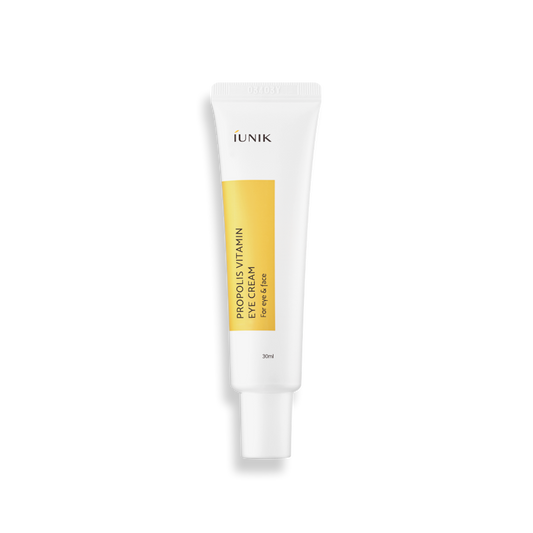
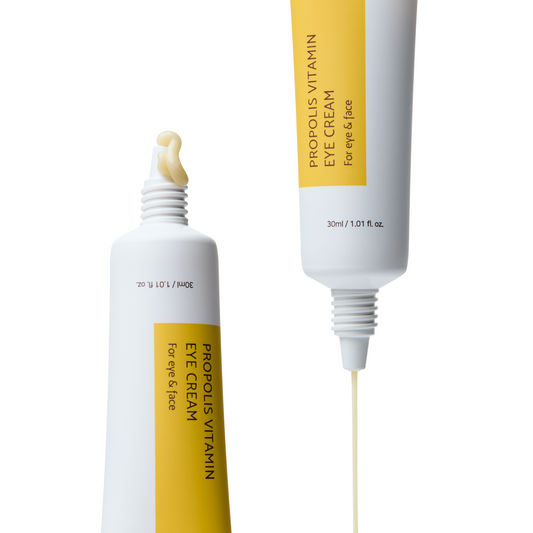
The Propolis Vitamin Eye Cream is built for that zone specifically — richer, formulated to sit there comfortably, and doing firming and brightening work in a place where a watery serum would mostly just evaporate.
In practice: serum across your face as usual, then eye cream patted around the orbital bone rather than right up against the lash line. Ring finger, no dragging. The skin there is thin enough that pressure does more harm than any ingredient does good.
This is the pairing to pick if the eye area is the thing you notice first in photographs.

Way Two: Hold It In Overnight
The second option looks less exciting and often shows up faster.
A large part of what reads as "firm" on any given day is water. Well-hydrated skin sits fuller, reflects light more evenly, and bounces back quicker. Dehydrated skin looks slack even when nothing structural has changed.
Skin also loses a surprising amount of moisture overnight. Whatever your serum has done during the evening, several hours of unprotected water loss will undo a portion of it by the time you wake up.
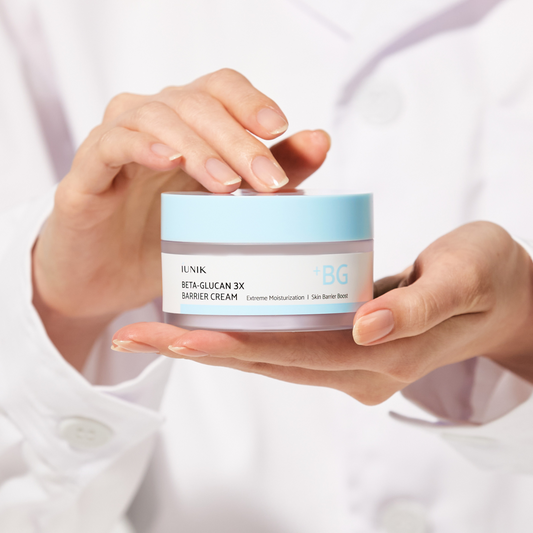
The Beta Glucan 3X Barrier Cream is the answer to that — a proper occlusive final layer, built to hold hydration for up to 100 hours, sealing the serum underneath rather than competing with it.
This is the pairing to pick if your skin is also dry or dehydrated, if you're in air conditioning most of the day, or if you want to see something change sooner rather than in three months.
Way One: Take it to the Eye Area
A face serum is formulated for face skin. The area around your eyes is thinner, drier, and in constant motion, and it's the first place any loss of firmness announces itself.
The Propolis Vitamin Eye Cream is built for that zone specifically — richer, formulated to sit there comfortably, and doing firming and brightening work in a place where a watery serum would mostly just evaporate.
In practice: serum across your face as usual, then eye cream patted around the orbital bone rather than right up against the lash line. Ring finger, no dragging. The skin there is thin enough that pressure does more harm than any ingredient does good.
This is the pairing to pick if the eye area is the thing you notice first in photographs.
Way Two: Hold It In Overnight
The second option looks less exciting and often shows up faster.
A large part of what reads as "firm" on any given day is water. Well-hydrated skin sits fuller, reflects light more evenly, and bounces back quicker. Dehydrated skin looks slack even when nothing structural has changed.
Skin also loses a surprising amount of moisture overnight. Whatever your serum has done during the evening, several hours of unprotected water loss will undo a portion of it by the time you wake up.
The Beta Glucan 3X Barrier Cream is the answer to that — a proper occlusive final layer, built to hold hydration for up to 100 hours, sealing the serum underneath rather than competing with it.
This is the pairing to pick if your skin is also dry or dehydrated, if you're in air conditioning most of the day, or if you want to see something change sooner rather than in three months.
Which One to Start With
Look at a bare-faced photo in daylight. If your eye is drawn to the eye area, go with the eye cream. If what you see is overall flatness and dullness across the whole face, go with the barrier cream.
If you're genuinely torn, the barrier cream is the more forgiving first choice. It benefits every part of your routine rather than one zone, and the hydration effect gives you visible feedback in days while the firming work continues quietly underneath.
Which One to Start With
Look at a bare-faced photo in daylight. If your eye is drawn to the eye area, go with the eye cream. If what you see is overall flatness and dullness across the whole face, go with the barrier cream.
If you're genuinely torn, the barrier cream is the more forgiving first choice. It benefits every part of your routine rather than one zone, and the hydration effect gives you visible feedback in days while the firming work continues quietly underneath.
Using Both
If you end up with both, the order is straightforward: serum first, eye cream second, barrier cream last, going thinnest to thickest.
Keep the barrier cream out of the immediate eye area — you don't need it there, and rich creams too close to the lash line have a habit of migrating overnight.


Volufiline Grape PDRN Serum
Firm, Lift, Plump Skin
Propolis Vitamin Eye Cream
Bright + firm eye cream

Beta Glucan 3X Barrier Cream
Triple barrier repair cream