

How to Layer Sunscreen with Your Skincare Routine
Sunscreen is the most important step in your routine and the one most people apply wrong. Either it's layered too close to the previous product and pills up on the skin, or it's applied too thin and doesn't deliver the SPF on the label, or it's slotted in the wrong order entirely and undercut by everything that goes on top.
None of this is obvious if no one has explained it. Here's the correct order, the timing that makes the difference, and the small details that separate sun protection that works from sun protection that looks like it's working.

Where Sunscreen Goes in Your Routine
The short answer: SPF is the final skincare step in your morning routine, and the first step before any makeup.
That means it goes after cleanser, toner, essence, serum, and moisturiser. Not before. Sunscreen is designed to form a protective film on the surface of your skin, if you layer anything else on top of it (apart from makeup), you're disrupting that film and reducing the protection.
The standard order:
- Cleanser
- Toner
- Essence
- Serum
- Moisturiser
- Sunscreen always last in skincare
- Makeup, if you're wearing any
That's it. The routine can be shorter , cleanser, moisturiser, sunscreen is fine. It can be longer if you layer additional treatments. But SPF is always the final skincare step.

The Timing Detail That Changes Everything
The single biggest reason sunscreen pills, goes patchy, or separates from the rest of your routine: not waiting long enough between layers.
Every product needs time to absorb. Applying SPF onto a moisturiser that's still sitting wet on the skin creates a greasy, unstable layer that will pill as soon as you rub your face or apply makeup.
Rule of thumb: wait 1–2 minutes between each skincare step. Between moisturiser and SPF, give it the full 2 minutes. Use the time to brush your teeth, make coffee, or pick out what you're wearing. The skin needs to actually absorb what you've applied before the next layer goes on.
If you're in a rush, the order of operations you can't shortcut is: moisturiser absorbs fully > SPF applied > SPF sets for 2–3 minutes > makeup.
How Much Sunscreen to Actually Apply
The SPF number on the bottle is based on a specific amount of product applied per area of skin: roughly two finger-lengths for the face and neck, or about a quarter-teaspoon for the face alone.
Most people apply far less which means they're getting maybe SPF 15 from a product labelled SPF 50.
If your sunscreen feels heavy, pilly, or greasy when you apply a proper amount, the product isn't right for you. The texture has to work at full-dose, not at half-dose.
A lightweight, water-texture SPF makes proper application realistic. The Centella Calming Daily Sun Water is built for exactly this; an ultra-low-viscosity formula that applies at full dose without the weight, pilling, or white cast that make most people under-apply. 82% skincare ingredients, five UV filters distributed through a micro-net structure, and a finish that disappears into the skin.
For drier skin types or anyone who wants their SPF step to do double duty, the Beta Glucan Barrier Sunscreen adds beta-glucan's hydration and firming benefits alongside the UV protection. For reactive or sensitive skin that prefers a traditional cream texture, the Centella Calming Daily Sunscreen delivers the same Centella-based soothing in a more familiar format.
When Moisturiser and Sunscreen Aren't Playing Well
If your SPF consistently pills or separates, the problem is almost always one of four things:
The moisturiser is too heavy.
Rich creams with high emollient content often don't play well under sunscreen. Switch to a lighter texture, a gel-cream or water-cream, for days when you know you'll be layering SPF and makeup.
The silicones are clashing.
Certain silicones in moisturisers and sunscreens can interact and ball up on the skin. If you've ruled out the other issues, try pairing products from the same brand or the same general texture family.
You're not waiting long enough.
Go back to the 2-minute rule. This fixes more pilling problems than any product change.
You're applying too much product overall.
If you're using a rich essence, a thick serum, a heavy moisturiser, and a creamy SPF, there's simply too much sitting on the skin. Simplify the routine, pick lighter textures, and the layering works.
Reapplication: The Part Most Routines Skip
SPF isn't a morning-only step if you're spending significant time outside. UV protection degrades throughout the day from sweat, from rubbing, from the film simply breaking down under sun exposure. Dermatologists recommend reapplication every two hours of active sun exposure.
That's unrealistic for most people under most conditions. The practical rule: if you're outside for more than an hour during peak UV, reapply. If you're spending the whole day indoors, morning application is enough for most skin.
For reapplication over makeup, a sunscreen stick or mist is easier than trying to pat a liquid over foundation. A lightweight water-texture SPF like the Sun Water can also be applied over makeup in small amounts if you press rather than rub.

What to Pair Sunscreen With the Night Before
Morning SPF works better when the night before's routine supported the barrier. Overstripped, over-exfoliated skin is more vulnerable to UV damage and more likely to react to sunscreen ingredients.
If your skin struggles with SPF — stinging, redness, breakouts — look at the previous night's routine first. Cutting back on actives (retinoids, acids, strong vitamin C) for a few nights often fixes the SPF tolerance problem before any product change does.
Support the barrier overnight, and the morning SPF step becomes easier. The Beta Glucan 3X Barrier Cream is a good overnight choice when the barrier needs rebuilding — it's rich enough for proper recovery without any actives that would sensitise the skin to the next morning's sunscreen.
The Takeaway
Sunscreen layering isn't complicated, but it rewards attention to detail. Three things get you most of the way there:
SPF is last in skincare, first before makeup. Always.
Wait two minutes between moisturiser and sunscreen.
Apply enough two finger-lengths for face and neck, or the protection on the label isn't what you're getting.
A lightweight texture makes the second and third points realistic. That's the single biggest product-level variable: whatever SPF you can comfortably apply at full dose, every day, without thinking twice about it.
That's the sunscreen that actually protects your skin.


Centella Calming Daily Sun Water
Sun-calming water shield.
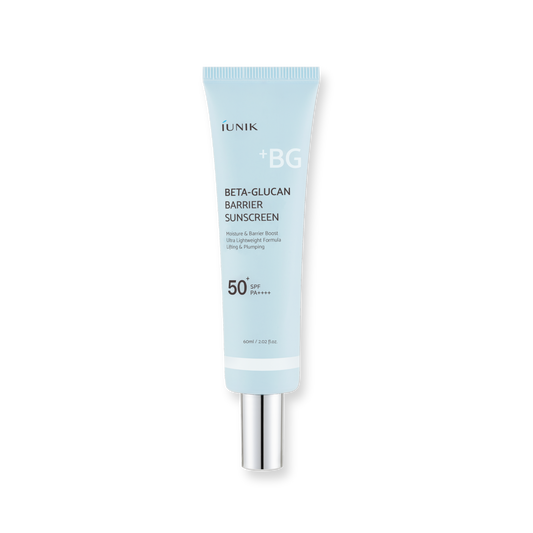
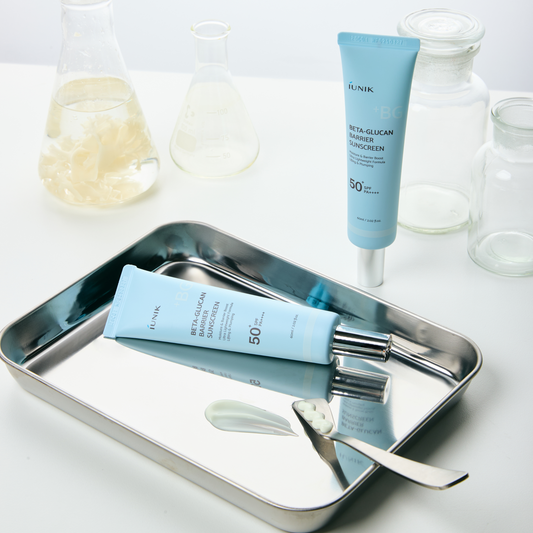
Beta Glucan Barrier Sunscreen
Firming sun defense SPF
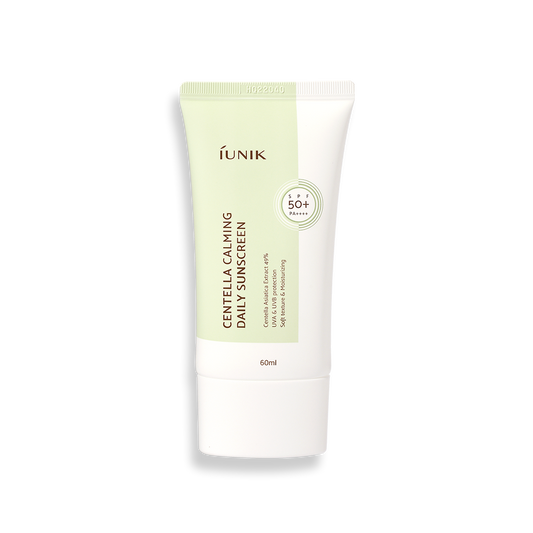
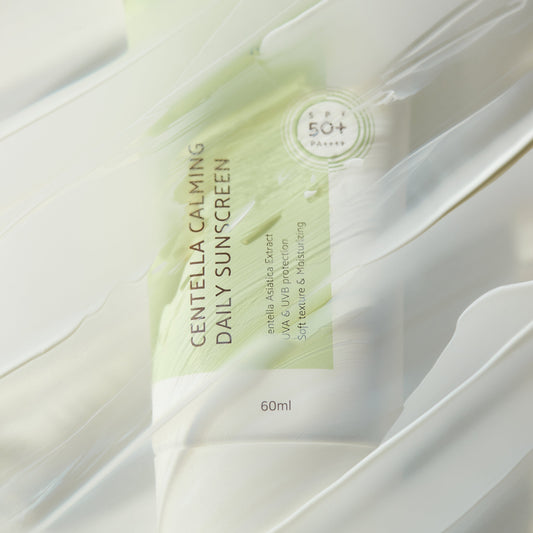
Centella Calming Daily Sunscreen
Calming sun care SPF