

Barrier Care 101: What Happens When You Over-Exfoliate
Winter skin can feel dull, tight, and a bit “meh”—so it’s tempting to exfoliate your way back to glow. The problem? Cold air, indoor heating, and post-holiday routine chaos can turn one extra acid night into a full-blown sensitised barrier.
Quick Takeaways
If your usual products suddenly sting, your barrier is asking for a break—stop exfoliating for now.
Think reset, then rebuild: cleanse gently, hydrate in layers, seal with a barrier cream.
“Tight but shiny” can still be dehydration (not oiliness) after over-exfoliation.
Keep routines short and boring for 7–14 days: fewer steps, fewer actives, fewer surprises.
Patch test new products and reintroduce actives one at a time, slowly.

The Real Explanation
Your skin barrier (the stratum corneum) is often described as a “brick and mortar” system: skin cells are the bricks; lipids (ceramides, cholesterol, fatty acids) are the mortar. Exfoliants—whether AHAs, BHAs, PHAs, enzymes, scrubs, or even “tingly” cleansing tools—work by loosening dead skin cells. Used sensibly, that can be helpful.
In winter, the maths changes:
- Lower humidity + heating increases water loss (TEWL), making skin drier and more reactive.
- Hot showers, windy commutes, festive late nights all add stress.
- If you exfoliate more to “fix” flakes or texture, you can strip the mortar faster than you can replace it.

When the barrier is compromised, skin becomes more permeable. That’s why:
- Products that were fine yesterday suddenly burn today.
- Skin looks red, blotchy, rough, and makeup sits poorly.
- You may notice more breakouts (inflammation + disruption + over-cleansing can do that), or the opposite—skin just feels painfully dry.
This isn’t about never exfoliating. It’s about timing and dosage—especially when winter is already doing the most.
What To Do
For now, stop:
Acids (AHA/BHA/PHA), retinoids, strong vitamin C, scrubs, peeling gels
Clay masks, harsh foams, long hot cleansing, cleansing brushes
Fragranced “treatment” steps if you’re currently reacting
If you’re using prescription treatments, or your skin is severely inflamed/cracked, speak to a pharmacist/GP/dermatologist for personalised advice.
Your goal is comfort first, then resilience.
MORNING (AM)
Gentle cleanse (or just rinse)
If your skin stings easily, a light cleanse is enough in the morning.
Hydrating first step
(toner/essence texture)
Hydrating serum
Barrier cream to seal
SPF
(daily—even in winter)
EVENING (PM)
Remove sunscreen/makeup gently
(avoid rubbing)
Low-pH, non-stripping cleanse
Milk essence or serum
(or both, if your skin tolerates it)
Barrier cream
(slightly more than AM)
Once your skin feels calm (no stinging, less redness, smoother feel), reintroduce:
One active at a time, once weekly to start
Avoid stacking (e.g., acid + retinoid + strong vitamin C in the same 24 hours)
If irritation returns, step back again—your skin is giving you feedback, not failing you.

Why Beta-Glucan is a Winter Repair Hero
Beta-Glucan (often derived from mushrooms or oats) is a barrier-friendly hydrator that supports skin comfort and water retention—exactly what over-exfoliated winter skin is missing. It’s a smart choice when hyaluronic acid or niacinamide-heavy formulas feel a bit “too much” for reactive phases, because Beta-Glucan focuses on hydration + soothing support with a gentle profile.
IUNIK skin barrier recovery Picks

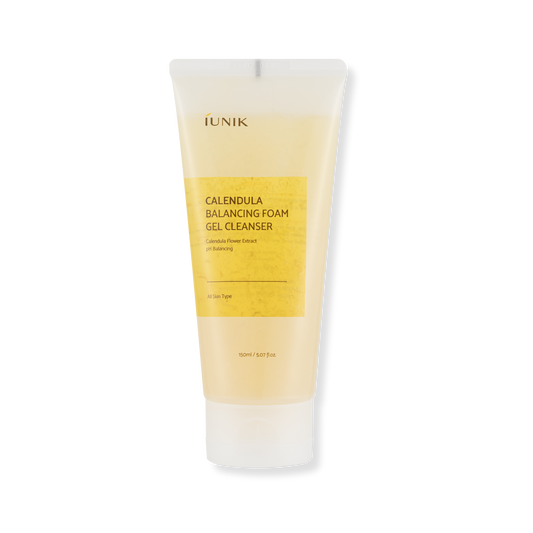
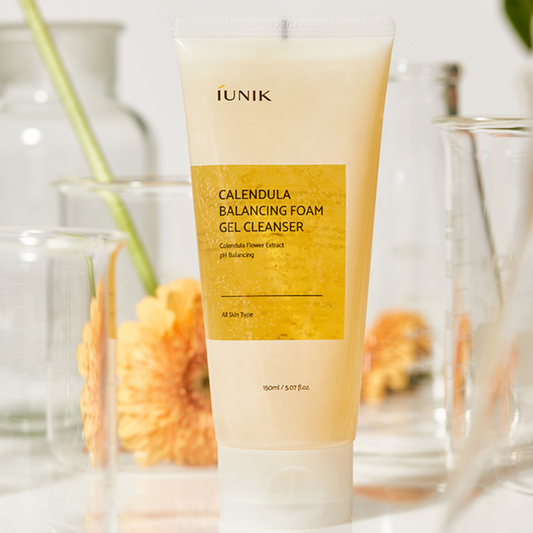
Calendula Balancing Foam Gel Cleanser
What it is: A low-pH gel cleanser that creates a soft microfoam to remove daily impurities without leaving skin tight.
Why it helps: Over-exfoliated skin doesn’t need “squeaky clean”—it needs clean without more barrier disruption. A gentle, pH-balanced cleanse helps keep irritation from snowballing.
Who it’s for: Sensitive, dry-in-winter, or post-exfoliation skin that reacts to strong foams.
How to use: PM (and AM only if needed). Use lukewarm water, 20–30 seconds, no scrubbing.
Pairing tip: If you wear sunscreen/makeup, double cleanse gently—let the cleanser do the work, not your hands.

Beta Glucan Lacto Barrier Milk Essence
What it is: A lightweight milky essence that combines toner + serum vibes, formulated with Lactobacillus Ferment Lysate and peptides, plus a moisture-layering blend (Beta-Glucan, Panthenol, Glyceryl Glucoside).
Why it helps: Over-exfoliation creates that “tight but still not hydrated” feeling. This is a first-step hydrator that supports barrier comfort and bounce, so later steps sit better.
Who it’s for: Winter-dry, sensitised, or elasticity-conscious skin—especially when you want hydration without piling on lots of layers.
How to use: After cleansing, press 1–2 layers into damp skin.
Pairing tip: Use it before your serum to reduce the urge to over-apply (which can feel heavy when skin is reactive).

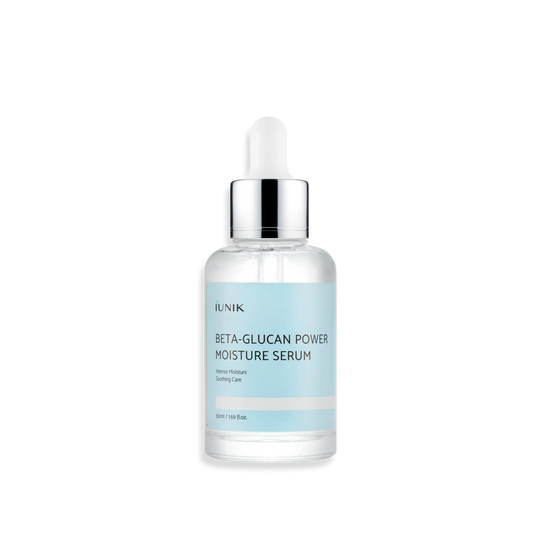
Beta Glucan Power Moisture Serum
What it is: A rich-but-comfortable barrier cream with Beta-Glucan plus a barrier-strengthening complex featuring Ectoin and Panthenol.
Why it helps: The fastest way to make over-exfoliated skin feel normal again is to seal hydration in and reduce ongoing water loss—especially in heated indoor air.
Who it’s for: Dry, rough, sensitised winter skin; also ideal as a “recovery cream” after you’ve overdone acids.
How to use: AM + PM as the final step. Use a slightly thicker layer at night on the driest areas.
Pairing tip: Keep your routine short: cleanser → hydrating layer → this cream. Consistency beats complexity.

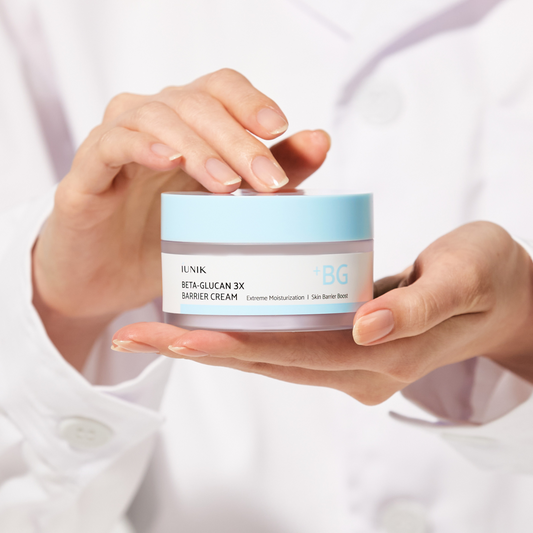
Beta Glucan 3X Barrier Cream
What it is: A rich-but-comfortable barrier cream with Beta-Glucan plus a barrier-strengthening complex featuring Ectoin and Panthenol.
Why it helps: The fastest way to make over-exfoliated skin feel normal again is to seal hydration in and reduce ongoing water loss—especially in heated indoor air.
Who it’s for: Dry, rough, sensitised winter skin; also ideal as a “recovery cream” after you’ve overdone acids.
How to use: AM + PM as the final step. Use a slightly thicker layer at night on the driest areas.
Pairing tip: Keep your routine short: cleanser → hydrating layer → this cream. Consistency beats complexity.
Recovery Stages: What You’ll Notice (and What It Means)
Stage 1 (Days 1–3): “Everything stings”
Focus: stop actives, simplify, cleanse gently, hydrate + seal.
Stage 2 (Days 4–7): “Less sting, still tight/rough”
Focus: consistent layering; don’t rush exfoliation back in.
Stage 3 (Week 2): “Comfort returns”
Focus: maintain barrier routine; reintroduce one active slowly if you choose.
Common Mistakes (That Keep You Stuck)
“Fixing” flakes with more exfoliation instead of more barrier support
Cleansing too long, too hot, or too often (especially morning + night with harsh formulas)
Layering multiple actives because results feel slow
Skipping moisturiser because you’re breaking out (compromised barriers can break out too)
Trying lots of new products at once—when your skin needs predictability
Forgetting SPF (UV still aggravates inflammation and slows recovery)
The Result
Over-exfoliation in winter isn’t a character flaw—it’s an easy mistake when your skin looks dull and the weather is working against you. The fix is refreshingly unglamorous: pause the actives, cleanse gently, hydrate in layers, and seal everything in with a barrier-supporting cream. Your glow comes back when your barrier feels safe again.
If your skin is in its “post-holiday, post-exfoliation” era, keep it simple: Calendula cleanse + Beta-Glucan hydration + Barrier Cream seal. Explore IUNIK’s Beta-Glucan barrier favourites to move from stingy and tight to calm and comfortable—one steady routine at a time.
Calendula Balancing Foam Gel Cleanser
Balancing daily cleanse gel


Beta-Glucan Lacto Barrier Milk Essence
Barrier-firming milk essence

Beta Glucan Power Moisture Serum
Lightweight daily moisture serum

Beta Glucan 3X Barrier Cream
Triple barrier repair cream